
 EN
EN
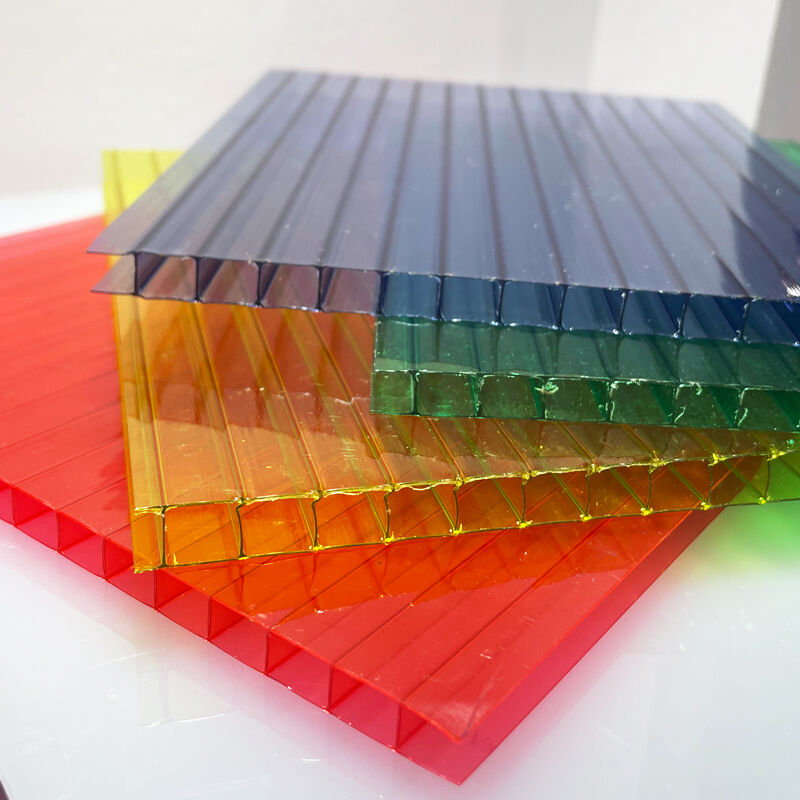
How Polycarbonate Sheet Behaves in Fire: Melting, Smoke, and Droplet Risks
Thermal Response and Melt-Flow Dynamics Under Flame Exposure
Polycarbonate sheets don't catch fire easily, but they do break down in a predictable way when exposed to flames. The material starts to soften around 300 degrees Celsius (about 572 Fahrenheit) and tends to flow away from heat sources. This creates what's called an insulating char layer that actually slows down how quickly the fire can get through. But if the heat keeps coming, things fall apart pretty fast as the melted plastic just drips off. How fast it melts depends on how thick the sheet is too. Thin single-layer sheets tend to run all over the place when heated, whereas those fancy layered laminates hold up much better against melting through completely. Take a 12mm laminated sheet for instance it lasts roughly two to three times longer than regular single layer stuff when tested with a torch according to standard lab tests.
Smoke Development Index (SDI) and Toxicity Profile in Real-World Scenarios
When it comes to burning characteristics, polycarbonate stands out because it produces very little smoke. The material typically scores under 200 on the ASTM E84 Smoke Development Index, which puts it way below what we see from most other plastics on the market. What happens when polycarbonate breaks down thermally? Mostly just carbon dioxide and water vapor come out of it. And here's something important - there aren't significant amounts of dangerous gases like hydrogen cyanide or carbon monoxide released, unlike what happens with materials such as PVC or polystyrene. Tests show that even in controlled fires, the smoke stays at less than 15% opacity right from the start. Plus, polycarbonate tends to stop burning on its own after flames go away. These properties mean people have better visibility if they need to evacuate quickly, and they face fewer risks from breathing in harmful substances.
Droplet Formation Risk and Its Implications for Vertical Fire Spread
Molten polycarbonate dripping during fires creates major problems for vertical fire spread, especially on building facades, skylight areas, and across multiple floors. Once temperatures get too hot, these flaming droplets can set fire to things beneath them, which makes flames move upwards faster than they normally would. The UL 94 VB test measures exactly how bad this issue is. Better quality fire resistant materials tend to produce no more than five flaming drips every minute according to these tests. To combat this danger, several approaches work well together. Installing barriers vertically with special catches for drips helps contain the problem. Adding silica to the material formulation increases its thickness when melted, reducing the likelihood of dangerous drips. Also important is keeping continuous sections under three meters long in areas where risks are highest. These combined methods have been proven effective in research settings, cutting down on droplet caused ignitions by around seventy percent in controlled experiments.
Key Fire Testing Standards for Polycarbonate Sheet Worldwide
ASTM E84/UL 723 vs. EN 13501-1: Flame Spread, Smoke, and Classification Differences
The standards ASTM E84 (also known as UL 723) and EN 13501-1 actually represent quite different approaches when it comes to evaluating fire safety. With ASTM E84, they run what's called a tunnel test which gives materials scores for how fast flames spread (Flame Spread Index) and how much smoke develops (Smoke Development Index). Materials then fall into three categories: Class A if their FSI is 25 or below, Class B between 26 and 75, and Class C from 76 up to 200. On the other hand, EN 13501-1 takes a broader look at several factors including flammability ratings from A to F, smoke output levels labeled s1 through s3, plus whether there are flaming droplets categorized as d0, d1, or d2. Because of these stricter requirements around smoke and droplet production, we often see situations where identical polycarbonate sheets get rated as Class A under ASTM E84 tests but only reach Euroclass C status according to EN 13501-1 standards. These differences force companies operating globally to adjust their product formulations depending on which market they're targeting.
UL 94 Flammability Ratings and Their Practical Relevance to Polycarbonate Sheet
ASTM and EN standards handle most of the building code stuff, but when it comes to how materials actually catch fire, that's where UL 94 steps in. This standard looks at whether materials will spread flames on their own, which matters a lot for situations where we need to stop fires from spreading locally. The testing involves dropping samples vertically and horizontally into flames, then giving them ratings like V-0 meaning the flame goes out within 10 seconds, or V-1/V-2 which allow longer burn times, plus there's the HB rating for horizontal burns. Polycarbonate sheets used in things like electrical boxes, train car interiors, and protective housing for equipment usually need that top UL 94 V-0 rating. Thickness makes all the difference too. A thin 3mm sheet might only get a V-2 rating, while doubling up to 6mm can hit the coveted V-0 mark. So engineers have to really think about material thickness when designing products for areas where fire safety is absolutely crucial.
Achieving Compliance: Euroclass B-s1,d0 and U.S. Building Code Requirements for Polycarbonate Sheet
Decoding EN 13501-1: Why B-s1,d0 Is the Benchmark for European Applications
The EN 13501-1 standard sorts construction materials based on three main factors: how they react when exposed to fire (rated from A to F), the amount of smoke they produce (graded s1 through s3), and whether they drop flaming particles (rated d0 to d2). For polycarbonate sheets, the top rating that makes economic sense in real world applications is Euroclass B-s1,d0. This means the material must show minimal spreading of flames (Class B rating), emit almost no smoke (s1 classification), and absolutely no flaming droplets (d0). The EU Construction Products Regulation actually mandates this classification for certain areas like emergency exits, transportation centers, educational buildings, medical facilities, and other spaces where many people gather. Polycarbonate often finds use here in things like roof panels, room dividers, and safety windows.
IBC Chapter 26, NFPA 701, and Chapter 8 Alignment for U.S. Interior and Exterior Use
Whether something meets U.S. building codes really depends on where it's being used and what kind of space we're talking about. Take a look at the International Building Code chapter 26, which basically says all interior surfaces need to pass this ASTM E84 test. Most often, walls and ceilings have to hit that Class A rating with a flame spread index below 25. Now when we get to those big exterior surfaces like curtain walls or stadium roofs, things change. The NFPA 701 standard comes into play here, checking how well materials resist catching fire. This matters particularly for stuff with more than 22% open area in the design. High rise buildings present another challenge altogether. According to IBC chapter 8, everything needs to be non combustible. So if someone wants to use polycarbonate in such structures, they either need to incorporate it into an assembly that has been properly tested or find some other way around the regulations that still satisfies code requirements. Once all these standards are met though, polycarbonate sheets can actually work pretty well in places like shopping mall atriums, train station terminals, and those massive glass installations across city skylines while keeping everyone safe from fire hazards.
FAQ
What is the melting point of polycarbonate sheets?
Polycarbonate sheets start to soften at around 300 degrees Celsius (about 572 Fahrenheit).
Does polycarbonate produce dangerous smoke when burned?
Polycarbonate produces very little smoke and primarily emits carbon dioxide and water vapor, unlike other plastics that may release harmful gases.
How does polycarbonate perform in fire testing standards?
Polycarbonate often meets high standards such as ASTM E84 Class A, Euroclass B-s1,d0, and UL 94 V-0, depending on the application requirements.