
 EN
EN
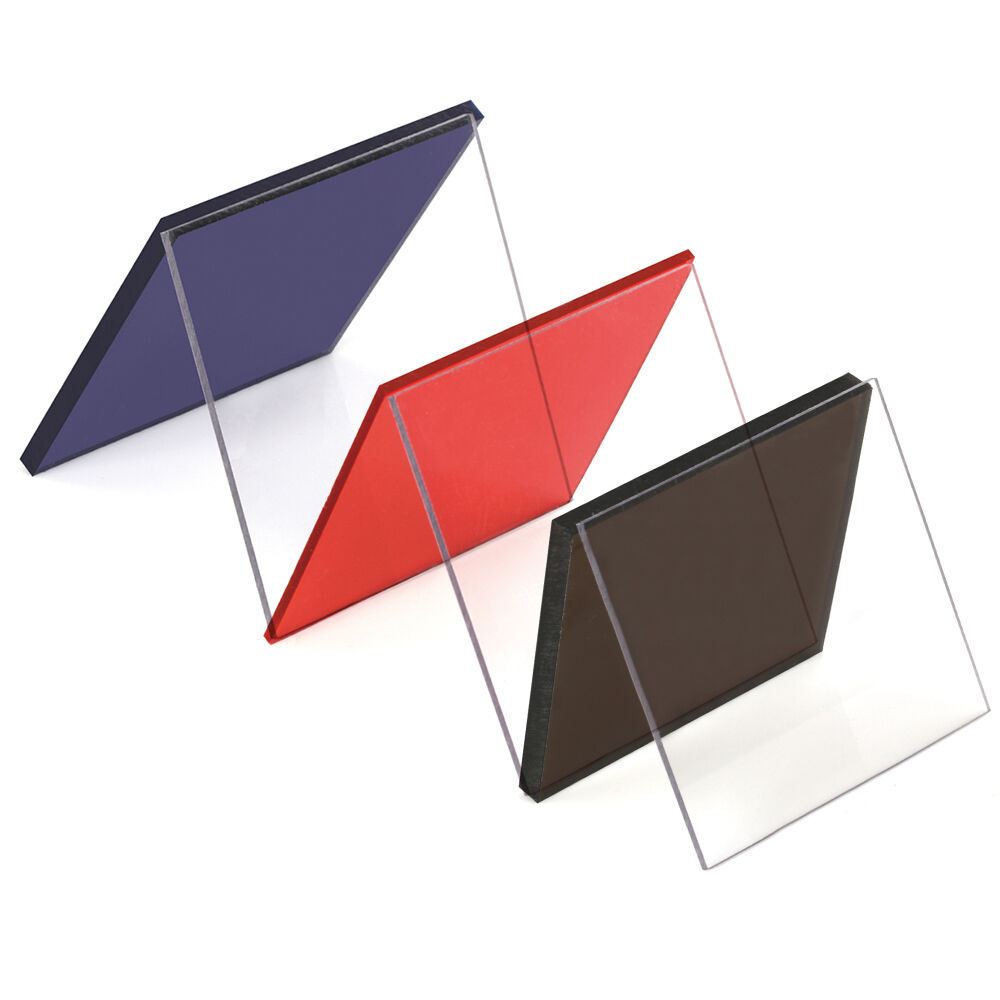
Why 1mm Polycarbonate Sheet Excels in Impact Resistance and Durability
Molecular Structure and Energy Absorption: How 1mm polycarbonate sheet achieves superior toughness vs. glass and acrylic
What makes polycarbonate so tough against impacts? Look at its molecular makeup really. Long, bendy polymer chains connected by carbonate groups create this special structure. When something hits polycarbonate, those chains actually stretch out and turn the impact energy into heat instead of letting cracks spread through the material. Glass is totally different though— it just shatters because of its stiff atomic structure. Acrylic isn't much better either since its shorter chains can't handle much abuse. Most interestingly, when made about 1mm thick, polycarbonate finds that sweet spot between being thin enough to flex under pressure but still strong enough to hold together. Tests show it can take blows around 250 times stronger than regular glass of the same thickness, all while only weighing about 1.2 kilograms per square meter, which is roughly half what glass would weigh. Plus, this stuff stays ductile even in super cold or hot conditions ranging from minus 40 degrees Celsius right up to 120 degrees. That's why so many industries rely on polycarbonate for parts where safety matters most.
Real-World Validation: Ballistic and impact test data (ASTM F1233, ISO 13477) for 1mm polycarbonate sheet
Testing under standard protocols really shows how tough 1mm polycarbonate sheets are when put to the test in real world conditions. When subjected to ASTM F1233 standards for security glazing, these sheets can actually stop penetration from .22 caliber bullets traveling at speeds around 120 meters per second. That's fast enough to break regular tempered glass completely. The material also holds up remarkably well during ISO 13477 tests for crack propagation. Even when exposed to pressures over 15 bar, there's no sign of failure whatsoever. Compared to acrylic materials, polycarbonate performs about three times better in these situations. And field tests back this up too, showing reliable performance time after time across different environments and applications.
- Hail impact (5 cm ice spheres at 30 m/s): Zero fractures after 50 cycles
- Drop test (1 kg steel ball from 3 m): Surface deformation <1 mm depth
Crucially, it retains 92% light transmission post-impact— evidence of retained optical and structural integrity. These results underscore why 1mm polycarbonate is specified for ballistic barriers, machinery guards, and storm-resilient architectural glazing where material failure carries high operational or safety risk.
Key Industrial Applications of 1mm Polycarbonate Sheet
Lightweight Protective Glazing: Transit shelters, retail security barriers, and kiosk overlays
With a weight of just 1.2 kg/m²— 50% less than glass— 1mm polycarbonate sheet redefines protective glazing in public infrastructure. Its strength-to-weight ratio delivers robust impact resistance without demanding heavy support structures:
- Transit shelters resist vandalism, hail, and thermal cycling while lowering installation and maintenance costs
- Retail security barriers deter forced entry attempts while preserving full visibility and aesthetic appeal
- Kiosk overlays sustain repeated contact and cleaning without clouding or cracking— unlike acrylic, which degrades under similar conditions
This thin, tough material meets rigorous safety requirements where conventional alternatives compromise on clarity, weight, or longevity.
Modular Design Enablement: Rapid-install display systems leveraging 1mm polycarbonate sheet’s low weight (1.2 kg/m²)
The ultra-low mass of 1mm polycarbonate sheet— 1.2 kg/m²— enables modular, agile design systems that cut installation time by 40–60%. Its combination of rigidity and lightness supports:
- Single-worker handling of large panels (up to 3 × 2 m)
- Frameless mounting via magnets, adhesives, or snap-fit hardware
- On-the-fly reconfiguration of trade show displays, museum exhibits, and retail signage
No thicker polycarbonate grade matches this efficiency: increased thickness adds disproportionate weight without meaningful gains in stiffness or impact performance. For dynamic, reuse-driven environments, 1mm is the engineering benchmark.
The Engineering Sweet Spot: Why 1mm Delivers Optimal Performance Balance
Thickness-Performance Curve: Nonlinear impact strength drop below 1mm and diminishing returns beyond 2mm
The relationship between thickness and impact resistance in polycarbonate isn't straightforward. When we look at sheets thinner than 1mm, there's a noticeable drop in performance. Testing according to ASTM D256 standards reveals that at just 0.8mm thick, the notched Izod impact strength plummets by around 40% compared to 1mm specimens. Basically, there's simply not enough material present to allow the polymer to absorb all the energy effectively. Things get interesting above 2mm thickness too. While going from 2mm to 3mm only boosts impact resistance by about 5%, it actually increases both weight and manufacturing costs by roughly half. That makes 1mm the sweet spot for most applications. At this thickness, polycarbonate provides approximately 17 kJ per square meter of impact resistance without exceeding the crucial weight limit of 1.2 kg per square meter, which is why many manufacturers consider this their go-to specification.
Critical Trade-Off Analysis: Optical clarity, thermal expansion, and edge stability at 1mm thickness
The 1mm thickness uniquely balances competing functional demands:
- Optical clarity: Maintains 91% light transmission (ISO 13468-2) with negligible distortion— essential for applications requiring both protection and visual fidelity
- Thermal expansion: With a coefficient of 70 × 10⁻⁶/K, it accommodates temperature swings in spans ≥ 3 m without buckling or stress-induced warping— eliminating the need for expansion joints required with thicker sheets
- Edge stability: Resists chipping during cutting, drilling, and handling; ISO 13477 puncture testing confirms 300% higher edge crack resistance than acrylic at equivalent thickness
This convergence of properties makes 1mm polycarbonate the only thickness that consistently satisfies stringent requirements across safety, aesthetics, fabrication, and lifecycle cost— without over-engineering or compromising performance.
FAQ
What makes 1mm polycarbonate sheets impact resistant?
1mm polycarbonate sheets are impact resistant due to their long, flexible polymer chains which absorb impact energy and prevent cracks from spreading.
How does 1mm polycarbonate compare to glass?
1mm polycarbonate is up to 250 times stronger than regular glass of the same thickness and weighs approximately half as much.
What are the industrial applications for 1mm polycarbonate sheets?
They are used in transit shelters, retail security barriers, kiosk overlays, and modular design systems due to their lightweight and impact-resistant properties.
What are the benefits of using 1mm polycarbonate in design?
It offers rapid installation, easy handling of large panels by single workers, and flexible mounting options without added weight.