
 EN
EN
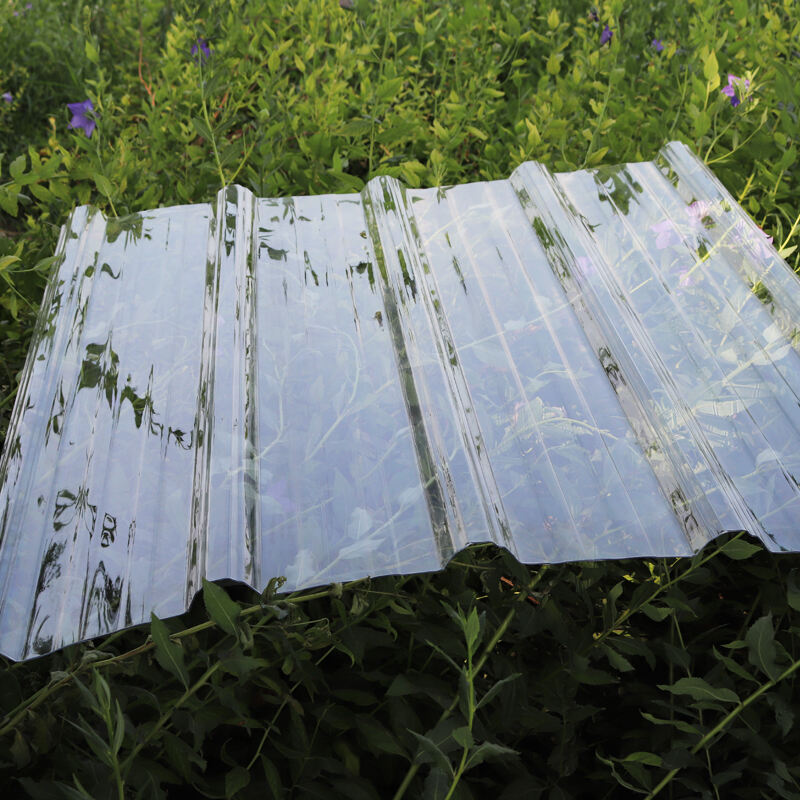
Understanding Transparent Polycarbonate Sheets and Their Role in Modern Glazing
What Are Transparent Polycarbonate Sheets and How Are They Used in Glazing?
Polycarbonate sheets come in transparent varieties that are both lightweight and resistant to UV damage. They let through around 90% of available light while standing up to impacts much better than regular glass does actually. The impact resistance is something special too, about 250 times stronger than standard glass panels. Because of these qualities, they work really well where tough glazing solutions are needed. Think about places like airport terminals or sports arenas where people install curved facades, skylights, or even noise reducing barriers along runways. The fact that they weigh so little makes all the difference when it comes to building structures. Take a look at numbers: one square meter of polycarbonate only tips the scales at 1.2 kilograms versus 25 kilograms for equivalent glass. That kind of weight difference means easier handling during installation and less money spent on supporting structures over time.
Performance Comparison: Transparent Polycarbonate vs. Glass and Acrylic
Three key performance areas distinguish polycarbonate from alternatives:
- Impact Resistance: Withstands 850 kJ/m² (ASTM D256), far exceeding glass's 0.5 kJ/m²
- Thermal Efficiency: Multi-wall configurations achieve U-values as low as 1.0 W/m²K, outperforming double-glazed glass at 2.8 W/m²K
- Workability: Can be cold-curved to a 150° radius without cracking—unachievable with acrylic or tempered glass
While inherently more scratch-prone than glass, modern protective coatings mitigate this limitation, adding 15–20% to material cost but ensuring long-term clarity.
Recent Innovations Enhancing the Functionality of Transparent Polycarbonate Sheets
Nanotechnology integration has addressed historical weaknesses:
- Self-healing coatings reduce scratch visibility by 70% (2024 Polymer Science Journal)
- Photochromic layers dynamically adjust light transmission from 80% to 20% based on UV exposure
- Hybrid multi-wall designs deliver up to 35 dB sound reduction—a 40% improvement since 2020
These advancements expand use into high-performance façades and smart building systems.
Key Advantages Driving Adoption in Construction-Sector Glazing Applications
Polycarbonate is growing at 18% annually in architectural glazing (Market Research Future, 2023), driven by four factors:
- Total Cost: 45% lower lifetime costs due to reduced labor and maintenance
- Energy Savings: Buildings using polycarbonate skylights see 22% lower HVAC expenses (ASHRAE 2023 case studies)
- Design Freedom: Enables cantilevered and curved structures impractical with glass
- Safety Compliance: Meets ICC-500 storm shelter standards without additional protective films
Despite 30–50% higher initial costs than glass, 78% of contractors now specify polycarbonate for projects over $5M—a 300% increase since 2018.
Glazing as the Dominant Application Segment for Transparent Polycarbonate Sheets
Major Glazing Applications: Skylights, Windows, and Building Envelopes
Polycarbonate sheets have become a go-to material choice for skylights, windows, and building exteriors because they last longer, let in plenty of light, and aren't heavy at all. These materials pass through around 90 percent of daylight most of the time while still standing up pretty well against impacts, making them great options for places with lots of foot traffic or areas prone to bad weather. Many architects prefer using multi-wall systems when designing atrium roofs or exterior walls since these setups cut down on structural weight requirements by roughly half compared to traditional glass installations. This reduction means buildings can be designed with more creative freedom without breaking the bank on construction costs.
Growth Drivers in Residential and Commercial Construction Markets
The market for glazing products is growing fast these days, particularly in homes where about 38% of all installations happen according to Market Insights from last year. As cities keep expanding and regulations get tougher, especially along coastlines where buildings need protection against hurricanes, more people are turning to these solutions. For businesses involved in bigger projects, cost effectiveness over time becomes the main concern when choosing materials. Contractors have noticed that installing this type of glass takes around 20 to 30 percent less labor compared to traditional laminated options, which makes a real difference on large scale jobs.
Market Data Insight: Glazing Accounts for Over 45% of Transparent Polycarbonate Demand
Around 45.2 percent of all transparent polycarbonate consumed worldwide goes into glazing applications, making it by far the biggest market segment for this material. Why? Because these sheets just work so well in practice. The latest multi-wall designs can hit U values down to 0.58 W per square meter Kelvin, which actually beats regular double-glazed glass when it comes to keeping buildings warm or cool. Looking at numbers from Coherent Market Insights (2024), we see construction takes up roughly 41.7% of all polycarbonate sheet production. That tells us something about how important these materials have become in today's building projects where energy efficiency matters more than ever before.
Balancing Aesthetic Perception with Structural Performance in Architecture
Architects now leverage polycarbonate to harmonize aesthetics with resilience. Textured finishes diffuse light while maintaining 80% visibility—ideal for office privacy screens. Modern UV-resistant coatings ensure less than 2% yellowing over 15 years, resolving past concerns about discoloration in façade applications and enhancing long-term visual performance.
End-Use Applications Across the Construction and Building Industry
Multi-Wall Transparent Polycarbonate Sheets in Skylights and Daylighting Systems
Polycarbonate with multiple walls has become the go-to material for skylights and daylighting projects because it insulates well against heat loss and spreads natural light throughout spaces. The numbers speak for themselves really these materials can slash HVAC costs by around 30 percent when compared to traditional glass options, all while letting through about 90% of available sunlight. What makes this stuff stand out though is how flexible it is structurally. Architects love working with it in big commercial atriums where they need those massive open spaces without tons of support beams. Industrial warehouses benefit too since they often require long spans across wide areas without compromising on lighting quality or energy efficiency.
UV-Resistant Light Transmission in Greenhouses and Agricultural Buildings
UV-stabilized polycarbonate sheets block harmful UV-B radiation while transmitting 80–85% of PAR (Photosynthetically Active Radiation), promoting healthy plant growth. Unlike polyethylene films, they resist yellowing and embrittlement. A 2024 agritech study found greenhouse operators achieved 22% higher crop yields and 40% lower replacement costs using polycarbonate over traditional plastic films.
Interior Partitions and Sound Barriers Leveraging Impact Resistance
With 250 times the impact resistance of glass, polycarbonate is ideal for interior partitions in airports, schools, and hospitals. Transparent dividers provide 28–32 dB noise reduction—meeting WHO acoustic standards—while preserving open sightlines. Flame-retardant formulations (UL94 V-0 certified) have expanded use into fire-rated corridor systems and safety-critical interiors.
Expanding Use in Infrastructure and Public Spaces Due to Durability
More and more transportation centers are turning to polycarbonate materials for their canopies and barriers these days. Local governments have found that maintenance bills drop by around 60% when they switch from tempered glass in those bus stops and pedestrian areas. Take Rotterdam Central Station as an example - after their big face lift in 2023, they installed massive weather canopies spanning 30 meters across. These aren't just impressive looking either. The material expands very little in heat (less than 10%) and stands up pretty well against strong winds too, meeting standards for category 1 hurricanes. Makes sense why so many cities are making the switch nowadays.
Comparative Analysis: Thermal, Mechanical, and Optical Properties
When it comes to materials for demanding applications, polycarbonate really stands out compared to both glass and acrylic. The impact resistance is absolutely remarkable too – about 200 to 250 times better than regular glass. And let's not forget about thermal properties either. Acrylic expands quite a bit when heated, but polycarbonate only expands around 70% less, which means it doesn't warp much even when exposed to extreme temperatures ranging from as cold as minus 40 degrees Celsius all the way up to plus 120. Glass does transmit a little more light at around 92%, true enough. But polycarbonate still manages an impressive 88% light transmission while weighing just half as much as glass. This makes for thinner support structures and quicker installations, something that can make a huge difference in big construction projects where time and space matter most.
Energy Efficiency and Insulation Benefits of Multi-Wall Polycarbonate Sheets
Air-filled chambers in multi-wall designs reduce heat transfer by 40–60% versus single-pane glass. Triple-wall configurations reach U-values as low as 0.58 W/m²K while allowing 85% visible light transmission. This combination supports daylight optimization and reduced HVAC loads, making them a preferred choice for green buildings pursuing LEED certification.
Lifecycle Cost Advantages Despite Higher Initial Investment
Though 20–35% more expensive upfront than tempered glass, polycarbonate offers a service life of 20–25 years—double that of typical glass assemblies. Lower breakage rates, minimal maintenance, and energy savings contribute to 30–45% lower lifecycle costs in commercial applications over two decades.
Overcoming Market Perceptions About Cost and Aesthetics
Manufacturers have countered skepticism with ultra-clear grades matching glass in optical performance and textured finishes mimicking designer glass. According to a 2023 industry survey, over 78% of architects now specify polycarbonate more frequently after reviewing lifecycle data. New UV-stabilized formulations retain 95% clarity after 15 years, effectively closing the aesthetic gap with glass.
Emerging Trends Fueling Growth in the Transparent Polycarbonate Glazing Market
Sustainability Trends: Recyclability and Lower Carbon Footprint
Transparent polycarbonate supports circular construction, incorporating up to 34% recycled content without compromising clarity (Industry Report, 2023). Closed-loop recycling in manufacturing cuts production emissions by 25–40%, aligning with global climate goals like the Paris Agreement and driving preference in sustainable developments.
Integration with Smart Building Technologies and Daylight Optimization
Modern polycarbonate glazing integrates with IoT-enabled building systems. Advanced multi-wall designs optimize natural light diffusion, reducing reliance on artificial lighting by 18–22% in commercial spaces (Daylighting Study, 2024). Emerging photovoltaic-responsive tinting layers further enhance energy efficiency in adaptive façades.
Rising Demand from Net-Zero Energy and Green Building Projects
LEED-certified projects increasingly adopt polycarbonate for roofing and curtain walls due to its 0.72 U-value—30% better than insulated glass (Green Building Council, 2023). Combined with a 50-year potential lifespan and 95% recyclability, it plays a critical role in net-zero energy constructions, a sector projected to grow 12% annually through 2030.
Future Outlook: Technology and Regulation Shaping Market Expansion
Regulations such as EU EN 14081 fire safety standards and California's Title 24 energy code are pushing product innovation. Next-generation anti-microbial and self-healing surface treatments aim to serve healthcare and education markets, potentially unlocking $3.8 billion in new demand by 2028 (Construction Forecast, 2023).
FAQ
-
What are the main uses of transparent polycarbonate sheets?
Transparent polycarbonate sheets are mainly used in applications where lightweight, impact-resistant glazing is important, such as in skylights, windows, and building façades. -
How do transparent polycarbonate sheets compare to glass in terms of impact resistance?
Polycarbonate sheets are 250 times stronger than standard glass panels, making them much more resistant to impacts. -
Are transparent polycarbonate sheets more energy-efficient than glass?
Yes, multi-wall polycarbonate sheets are more energy-efficient with lower U-values, reducing heat transfer compared to single-pane glass. -
Can polycarbonate sheets withstand environmental impacts?
Polycarbonate sheets have UV-resistant coatings and can survive strong winds and temperature extremes, making them suitable for outdoor applications. -
What is the lifecycle cost of using polycarbonate sheets?
Despite higher upfront costs, the lifecycle cost is lower due to energy savings, reduced maintenance, and longer service life. -
How do transparent polycarbonate sheets align with sustainability goals?
They support circular construction and have up to 34% recycled content, reducing carbon footprint and aligning with climate goals like the Paris Agreement.
Table of Contents
-
Understanding Transparent Polycarbonate Sheets and Their Role in Modern Glazing
- What Are Transparent Polycarbonate Sheets and How Are They Used in Glazing?
- Performance Comparison: Transparent Polycarbonate vs. Glass and Acrylic
- Recent Innovations Enhancing the Functionality of Transparent Polycarbonate Sheets
- Key Advantages Driving Adoption in Construction-Sector Glazing Applications
- Glazing as the Dominant Application Segment for Transparent Polycarbonate Sheets
- End-Use Applications Across the Construction and Building Industry
- Comparative Analysis: Thermal, Mechanical, and Optical Properties
- Energy Efficiency and Insulation Benefits of Multi-Wall Polycarbonate Sheets
- Lifecycle Cost Advantages Despite Higher Initial Investment
- Overcoming Market Perceptions About Cost and Aesthetics
- Emerging Trends Fueling Growth in the Transparent Polycarbonate Glazing Market