
 EN
EN
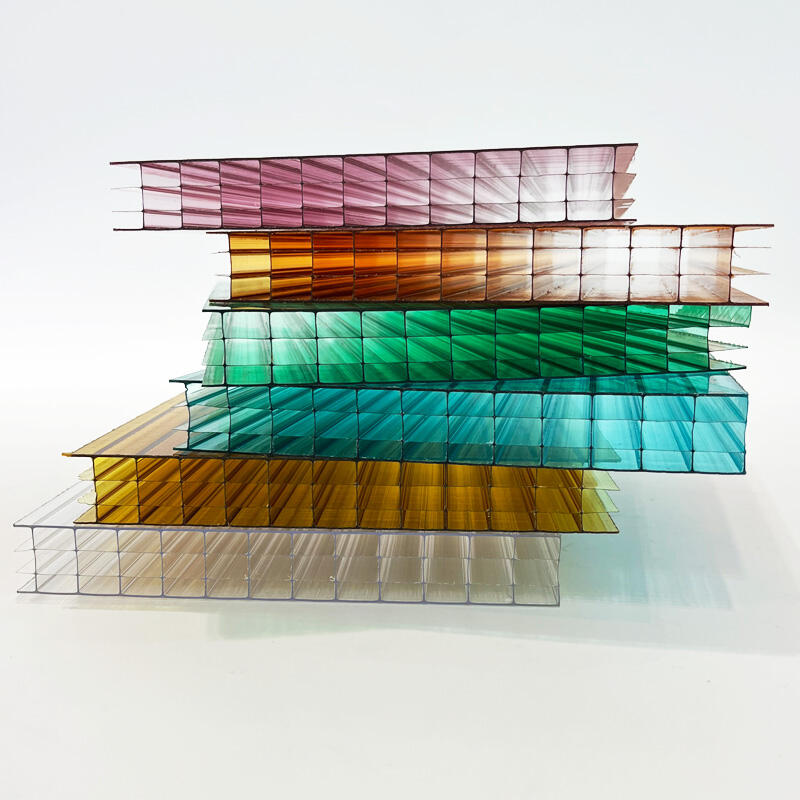
Understanding Light Transmission in Multiwall Polycarbonate Sheets
How Light Interacts with Multiwall Polycarbonate Sheet
Multiwall polycarbonate sheets transmit up to 90% of visible light, using their hollow-channel design to refract and disperse sunlight effectively. Unlike solid panels, the internal air gaps enhance light scattering while preserving high luminous efficacy, making them ideal for greenhouses and skylights where balanced, glare-free illumination is essential.
Optical Properties of Polycarbonate Materials: Clarity, Haze, and UV Resistance
These sheets offer glass-like clarity with haze levels below 3%, thanks to advanced co-extrusion techniques that ensure uniform light distribution. A built-in UV-resistant layer blocks 99% of harmful ultraviolet radiation, while anti-yellowing additives prevent the 12–15% translucency loss seen in untreated polycarbonate after 5–7 years of sun exposure.
Impact of Panel Thickness and Wall Structure on Light Transmission (4–16mm Range)
| Thickness Range | Light Transmission | Key Structural Benefit |
|---|---|---|
| 4–6mm | 82–88% | High clarity, basic insulation |
| 8–10mm | 75–80% | Enhanced diffusion, thermal efficiency |
| 12–16mm | 65–72% | Maximum rigidity, superior heat retention |
| Thicker panels reduce light transmission by approximately 1–3% per additional millimeter but significantly improve mechanical strength and thermal performance. |
Comparative Performance: Single-Layer vs. Multiwall Polycarbonate Sheets
- Single-layer sheets: Deliver 92–95% light transmission but offer limited insulation (U-value: 5.8 W/m²K)
-
Multiwall sheets: Provide 70–88% transmission with up to 60% better thermal efficiency (U-value: 3.2–1.7 W/m²K)
The honeycomb structure diffuses light 40% more effectively than flat panels, reducing glare and improving visual comfort in bright environments.
Advances in UV-Resistant Coatings for Sustained Transparency
Modern nano-coatings applied during manufacturing extend service life by 8–12 years. These micro-layered films reflect UV-A/B rays without compromising visible light transmission, maintaining over 85% clarity after a decade of outdoor use, a threefold improvement over early 2000s formulations.
Light Diffusion Mechanisms in Multiwall Polycarbonate Sheets
Multiwall polycarbonate sheets use engineered optical structures to optimize illumination quality. Their multi-chambered design ensures even light distribution across architectural and lighting applications through controlled scattering and refraction.
The Science of Light Scattering and Uniform Illumination
The 3D cellular structure (typically 2–6 chambers) redirects incoming sunlight via multiple internal reflections, converting 83–90% of transmitted light into diffuse radiation. This eliminates harsh shadows while sustaining brightness levels similar to glass, enhancing visual comfort in interior spaces.
Role of Microcell Structure in Enhancing Diffusion Properties
Precision-engineered cell sizes (3mm–16mm) create predictable refraction patterns. Smaller cells (<6mm) increase diffusion by 40% compared to single-wall alternatives, while retaining Visible Light Transmittance (VLT) above 85%. The air gaps between walls further randomize light paths, acting as secondary diffusers.
Integration of Nano-Diffusers for Softer, More Even Lighting
Surface-texturing technologies apply 50–200nm patterns to sheet surfaces, reducing glare index by 30% without sacrificing transparency. This innovation achieves dispersion angles up to 93°, delivering natural daylight conditions with less than 10% brightness variation across covered areas.
Balancing Diffusion and Brightness in Architectural Applications
Modern multiwall sheets achieve diffusion efficiencies of 0.87–0.92 under CIE standards, outperforming traditional plastic diffusers (0.72–0.78). For skylights and commercial interiors, architects often select 4mm–8mm thicknesses to balance 60–75% VLT with luminance below 1,500 cd/m², key parameters for visual comfort in offices and retail environments.
Glare Reduction and Visual Comfort in Real-World Applications
How Multiwall Polycarbonate Sheeting Minimizes Glare in Sunlit Environments
Multiwall polycarbonate has those internal channels that actually diffuse direct sunlight pretty effectively. The material cuts down harsh beams while still letting through around 70 to 85 percent of visible light. According to research published last year in an architecture journal, when we look at 8mm thick panels specifically, they cut glare levels by about 22% compared with regular single layer options. That makes these panels great choices for places like offices or retail stores where people spend long hours working or shopping. Nobody wants to deal with uncomfortable glare all day. Plus, most products come with UV protection coatings now which stop them from turning yellow over time. These coatings help maintain good visibility even after decade plus of exposure to sunlight.
Case Study: Greenhouse and Skylight Installations Using PC Diffuser Sheets
In Mediterranean greenhouse complexes, switching to 16mm multiwall diffuser panels reduced plant sunburn incidents by 30%, while maintaining photosynthetic active radiation (PAR) above 550 µmol/m²/s. In airport terminals, the microcell structure eliminates sharp shadows, helping achieve UGR values below 19, critical for passenger comfort and safety in large-scale glazing applications.
Trade-offs Between Transparency and Glare Control: Practical Considerations
Designers must balance key factors when selecting polycarbonate for glare-sensitive environments:
| Parameter | High Transparency | Optimized Diffusion |
|---|---|---|
| Panel Thickness | 4–6mm | 8–16mm |
| Light Loss | 8–12% | 15–25% |
| UGR Improvement | Moderate | High |
Thinner sheets (4–6mm) are preferred where maximum brightness is critical, whereas thicker profiles (10–16mm) dominate in applications prioritizing visual comfort. New nano-diffuser coatings now deliver 92% haze without the milky appearance typical of conventional diffusing materials.
Applications and Advantages of Polycarbonate Diffuser Sheets in Lighting Design
What Is a Polycarbonate Diffuser Sheet? Function in LED and Lamp Systems
Polycarbonate diffuser sheets work great at spreading out light evenly while cutting down on annoying glare from lighting fixtures. These sheets let through around 86 to 91 percent of visible light, which is pretty much the same as glass but they're half the weight. The surface has special patterns like ribs or prism shapes that help spread the light all over the place. That makes them really good choices for things like LED troffers in offices, task lighting in workshops, and those big lights used in factories. According to a recent study published last year, buildings using these polycarbonate sheets instead of regular acrylic saw their lighting efficiency go up by nearly 20%. For businesses looking to save money on energy costs without sacrificing quality illumination, this difference can really add up over time.
Durability and Long-Term Efficiency in Commercial Lighting Covers
With impact resistance 250 times greater than glass, polycarbonate is highly reliable in high-traffic areas like warehouses and parking garages. Key benefits include:
- UV-resistant coatings preserve 92% transparency after a decade of exposure
- Stable performance across temperatures from -40°C to 120°C
- 30% lower maintenance costs due to shatter resistance
Recent analysis shows polycarbonate lighting covers last two to three times longer than traditional materials in coastal environments.
Cost-Benefit Analysis: Initial Investment vs. Lifespan Performance
Although multiwall polycarbonate sheets cost 20–35% more upfront than acrylic, their 25-year service life results in 40–60% lifetime savings. Energy modeling reveals significant advantages:
| Metric | Polycarbonate | Glass |
|---|---|---|
| Annual energy loss | 8-12% | 18-22% |
| Replacement cycles | 1 | 3-4 |
| Recycling rate | 98% | 76% |
When combined with reduced HVAC loads from improved thermal insulation, most facilities achieve return on investment within 3–5 years.
FAQs on Multiwall Polycarbonate Sheets
1. What are the benefits of using multiwall polycarbonate sheets?
Multiwall polycarbonate sheets offer high light transmission, excellent thermal insulation, UV resistance, and durability. They are ideal for applications like greenhouses, skylights, and commercial lighting systems.
2. How does thickness affect the properties of polycarbonate sheets?
Thicker polycarbonate sheets tend to reduce light transmission but improve mechanical strength and thermal insulation. They are suitable for applications requiring visual comfort and reduced glare.
3. What is the difference between single-layer and multiwall polycarbonate sheets?
Single-layer sheets offer higher light transmission but less insulation, whereas multiwall sheets provide improved thermal efficiency and glare reduction through their honeycomb structure.
4. Are polycarbonate sheets suitable for outdoor use?
Yes, polycarbonate sheets are suitable for outdoor use as they are UV-resistant and have a long lifespan, maintaining high transparency even after years of exposure to sunlight.
Table of Contents
-
Understanding Light Transmission in Multiwall Polycarbonate Sheets
- How Light Interacts with Multiwall Polycarbonate Sheet
- Optical Properties of Polycarbonate Materials: Clarity, Haze, and UV Resistance
- Impact of Panel Thickness and Wall Structure on Light Transmission (4–16mm Range)
- Comparative Performance: Single-Layer vs. Multiwall Polycarbonate Sheets
- Advances in UV-Resistant Coatings for Sustained Transparency
- Light Diffusion Mechanisms in Multiwall Polycarbonate Sheets
- Glare Reduction and Visual Comfort in Real-World Applications
- Applications and Advantages of Polycarbonate Diffuser Sheets in Lighting Design