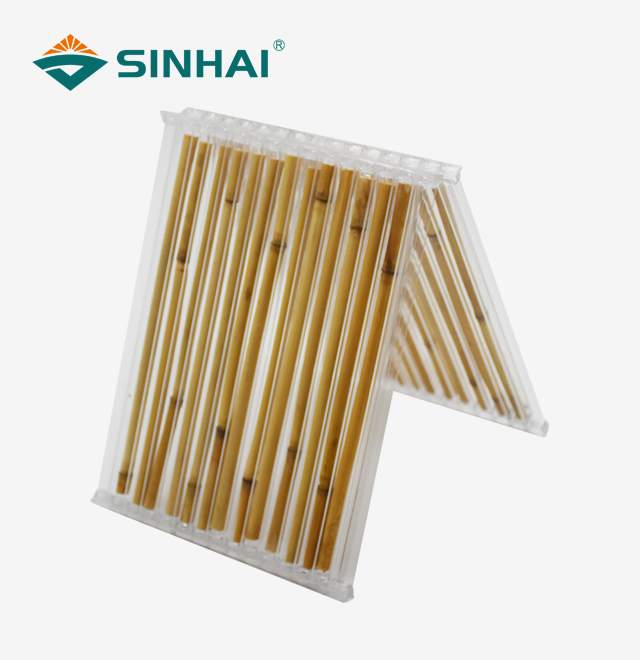
Bamboo PC Plastic Sheet — Bamboo-Textured Polycarbonate Roofing & Glazing Panels for Architectural and Industrial Use
A thermoplastic panel called Bamboo PC Plastic Sheet is produced entirely of virgin polycarbonate resin and has a bamboo rib structure that blends structural strength with a natural visual character. The co-extruded UV protection layer is 50-113 microns thick while the sheet thickness is 3 mm to 12 mm. Impact resistance is around 250 times better than glass. The sheet is produced by Baoding Sinhai Sunboard Manufacturing Co., Ltd., a direct manufacturer with over 30 years’ experience in polycarbonate and three production bases with more than 25 production lines.
What Is Bamboo PC Plastic Sheet?
Pests and rot can happen to natural bamboo, and it costs a lot to keep up. Acrylic sheets that are sold in stores are brittle and don't have very high fire ratings. By combining polycarbonate resin with a bamboo-grain rib structure, Bamboo PC plastic sheet overcomes both of these drawbacks and creates a lightweight panel that looks like natural bamboo while also meeting the structural and fire-performance needs of engineering applications.
Key Technical Specifications
| Parameter |
Details |
| Material |
100% virgin polycarbonate (SABIC / Bayer or customized) |
| Thickness |
3 mm – 12 mm |
| Design |
Bamboo rib structure |
| UV Protection Layer |
Co-extruded, 50–113 microns, single or double face |
| Impact Strength |
~850 J/m (approx. 250× that of glass) |
| Service Temperature |
−40 °C to +120 °C |
| Light Transmission |
25%–85% depending on texture density |
| Tensile Strength |
≥60 MPa |
| Flame Retardancy |
UL94 V-0 or V-2; ASTM E84 Class A |
| Linear Expansion Coefficient |
0.065 mm/m°C |
| Cold-Bend Radius |
Minimum 175× sheet thickness |
| Available Colors |
Transparent, bronze, grey, opal, lake blue, amber, dark blue, silver, orange, yellow, or custom |
| Processing Services |
CNC cutting, bending, drilling, printing |
| Packaging |
PE film on both sides, wooden pallet |
Material and UV Protection
The sheet is made from 100% new plastic and no reclaimed material, so the quality is the same from batch to batch even when big orders are placed. Standard fresh PC resin can be chosen as the baseline, or foreign SABIC or Bayer material can be chosen based on the needs of the project.
The UV protection layer is made by co-extrusion instead of surface coating. This makes a strong bond between the layer and the sheet so it doesn't peel or delaminate over time. This co-extruded layer is between 50 and 113 microns thick and is supposed to stay the same colour and let light through for 10 years in usual outdoor circumstances.
Performance Properties
After going from -40 °C to +120 °C, the sheet doesn't break or bend. With a tensile strength of at least 60 MPa, it can handle roof loads that would normally bend or break glass.
It can take about 850 J/m of force, which is 250 times more than glass. Because of this, it is a good choice for guards for industrial machines, bus stops, and pergolas that need to be strong against impact. The recipe that puts out fires on its own meets the requirements of ASTM E84 Class A and UL94 V-0 or V-2. It also makes less smoke when it burns than PVC options.
Because of how the bamboo ribs are structured, they also help keep heat inside, so less heat goes from inside to outside.
Applications
If you need to block out noise and add a structured bamboo look without the weight of glass, bamboo pc plastic sheet is widely used in architecture for office walls, lit wall panels, and artistic dividers.
Places outside that get a lot of UV rays or humidity should avoid things like pergola roofs, fences, platforms, and bus stops. If the base gets wet, it doesn't move like real wood does.
In places that make or process food, industrial protective barriers like machine guards and cleanroom dividers are used. The bamboo-like finish hides surface marks and cuts down on glare. Strong acids and alcohols can't damage it, and it meets ASTM E84 Class A fire standards. This helps it stay in line in controlled buildings.
Quality Control
The following tests are done at every stage of production before the goods are shipped:
- Tests of Melt Flow Rate (MFR) on the raw material make sure that the resin is pure and will stay stable during processing.
- Impact Testing by Gardner makes sure that energy is taken in at high speeds.
- The ASTM G154 Accelerated Weathering Test looks at how the Yellowing Index changes over a fake ten years.
- For Dimensional Tolerance Checks, laser micrometres are used to make sure the accuracy is within ±0.05 mm.
- The cross-hatch adhesion test shows that the rough layer of bamboo doesn't come off when the temperature or humidity changes.
The goods have ISO 9001:2015, CE, RoHS, and UDEM certificates to back them up.
Customization and Processing
You can choose thicknesses between 3 mm and 12 mm. You can choose from clear, bronze, grey, opal, lake blue, amber, dark blue, silver, orange, yellow, and custom colours that are made to fit the needs of the project. For UV coating, you can choose between single-face and double-face options.
Some of the processing services we offer are printing, CNC cutting, bending, and drilling. We take both OEM and ODM projects. For non-standard architectural needs, vacuum forming, thermoforming, and special-shaped cutting are all options.
FAQ
Q1: Does the structure of the bamboo change how it is cold bended?
A: The sheet always has a cold-bend radius that is at least 175 times its thickness. When you bend along the grain direction, the stress is spread out evenly.
Q2: How does it work in places where fires are likely to happen?
A: It can put out fires on its own, meets ASTM E84 Class A, and makes less smoke than PVC options. This means it can be used in industry buildings and closed public areas.
Q3: Can chemicals used in industry be used to clean it?
A: The sheet can stand up to weak acids and alcohols. Cleaners with benzene, ketones, or rough alkaline agents should not be used because they can make the surface crack.
Q4: Will the pattern on the bamboo fade in direct sunlight?
A: Under normal outdoor conditions, the co-extruded UV layer is supposed to last for 10 years without losing a lot of colour or light penetration.
Q5: How do you handle thermal expansion during installation?
A: Because EPDM has a linear expansion coefficient of 0.065 mm/m°C, it is best to use pilot holes that are too big and EPDM gaskets to keep the door from buckling and allow for seasonal movement.
Q6: What kinds of raw materials are there?
A: By default, 100% virgin PC resin is used. Depending on the project's budget and performance needs, imported SABIC or Bayer material can be set up, or a custom specification can be made.
Contact Us
Do you have more questions about bamboo pc plastic sheet? Send inquiries about samples, technical drawings, pricing, or custom orders to [email protected].