
 EN
EN
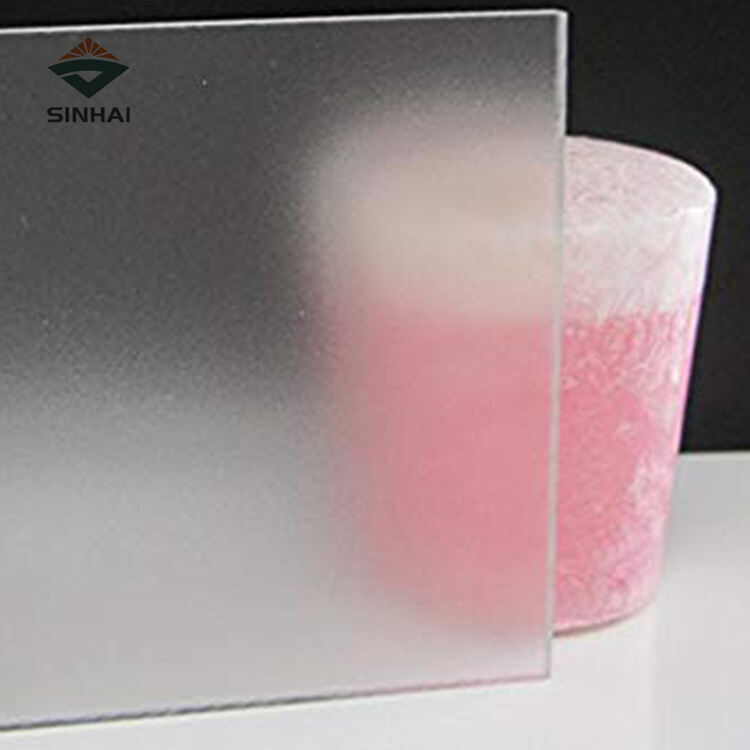
Understanding Polycarbonate Panel Material Properties
Key mechanical and thermal properties of polycarbonate
Polycarbonate panels are really tough when it comes to impacts, about 250 times stronger than regular glass actually. They also have impressive tensile strength at around 12,000 PSI which means they hold up well even when subjected to mechanical stress. The thermal expansion coefficient is something engineers need to keep in mind too, sitting at 0.065 mm per meter per degree Celsius according to Ponemon's research from last year. While this does require some extra planning for dimensional changes during installation, polycarbonate stays pretty stable throughout quite a wide temperature range, working reliably from as cold as minus 40 degrees all the way up to 135 degrees Celsius. Because of these properties, many industries rely on polycarbonate panels for applications that would quickly destroy conventional materials.
Advantages of polycarbonate in custom design applications
Polycarbonate panels transmit about 92 percent of available light, which is pretty much on par with regular glass, and they weigh only about half as much as traditional materials at around 8.7 pounds per cubic foot compared to 15.6 pounds for other options. This makes them great choices when architects need something lightweight yet effective for bringing natural light into buildings. These panels can be shaped into all sorts of interesting forms too, including those fancy hyperbolic paraboloid roof designs or curved walls, without needing any kind of heating process during shaping. The material keeps its strength even through these transformations. Plus, special UV resistant coatings help keep things looking clear and bright for years. After about a decade outside, these coated panels still retain roughly 95% of their original clarity. That's actually better than many acrylic products that tend to crack over time. All this means designers get both durability and creative freedom when working with polycarbonate instead of more fragile materials.
Challenges: Thermal sensitivity and stress cracking prevention
When dealing with thermal expansion issues, it's generally recommended to leave expansion gaps between 3 and 5 millimeters for every meter of panel installed. This helps prevent problems down the road. To reduce stress cracks, manufacturers should stick to bend radii no smaller than 3 mm when shaping materials and make sure all chemicals used with adhesives or cleaning products are compatible. The machining process itself matters too. Running specialized carbide tools at around 1,200 to 1,800 revolutions per minute cuts internal stresses significantly, about two thirds actually. After that, putting the material through an annealing process at approximately 125 degrees Celsius for somewhere between four and six hours really makes a difference. This step brings back molecular stability and gives the finished product much better lasting power over time.
Precision CNC Machining of Polycarbonate Panels for Complex Geometries
Achieving Tight Tolerances with CNC Machining Techniques
CNC machining can achieve dimensional accuracy down to about 0.01 mm, which is way better than what most traditional methods like 3D printing offer. The servo driven spindles help manage the natural flexibility of polycarbonate materials. This makes all those tiny details possible, like those special light diffusing patterns we see in some products. Because of this consistent performance across batches, manufacturers get reliable results every time. Plus, the material keeps its strong impact resistance properties intact. For these reasons, CNC processed polycarbonate works great for both things that need to look good optically and parts that must hold up structurally under stress.
Optimal Tool Selection and Cutting Parameters for Polycarbonate Panel Processing
Sharp, polished carbide tools with 45–55° rake angles reduce friction and heat buildup, critical for preventing stress cracks. Recommended cutting parameters include:
| Parameter | Range | Purpose |
|---|---|---|
| Spindle Speed | 8,000–12,000 RPM | Reduces tool friction |
| Feed Rate | 0.15–0.25 mm/tooth | Limits thermal deformation |
| Depth of Cut | ←1 mm | Prevents edge chipping |
Flood cooling with deionized water keeps temperatures below 120°C, well under the glass transition point of 145°C, avoiding warping or degradation.
Machining Complex Shapes While Minimizing Deformation
Adaptive toolpaths reduce lateral forces by 40% compared to traditional milling, minimizing deflection in thin-walled sections. Fixtures that pre-stress panels counteract polycarbonate’s relatively low modulus (2.4 GPa), maintaining flatness during machining. A post-machining annealing cycle at 110°C for 2–4 hours relieves residual stresses and restores molecular alignment without distortion.
Case Study: High-Precision Automotive Components from Machined Polycarbonate Panels
A recent project for LED headlight housings required 0.05 mm positional accuracy across 200 mounting points. By integrating diamond-coated tools with real-time thermal monitoring, the team achieved a 99.8% yield rate—validating CNC-machined polycarbonate panels for safety-critical automotive applications demanding optical clarity, dimensional precision, and crash resistance.
Custom Fabrication Techniques: Cutting, Bending, and Forming Polycarbonate Sheets
Precision Cutting, Drilling, and Milling Without Compromising Structural Integrity
CNC routers achieve ±0.005" accuracy using triple-flute carbide bits, while 10.6 µm fiber lasers provide clean, low-heat cuts. For sheets up to 0.25" thick, blade speeds below 12,000 RPM reduce heat-induced stress by 58%. Vibration-damped fixturing allows drilling of 0.3 mm micro-holes without microfractures—essential for optical sensors and load-bearing assemblies.
Cold Curving and Cold Line Bending Methods for Polycarbonate Panels
Cold forming enables permanent bends up to 150° without sacrificing UV resistance. For 3 mm panels, a minimum bend radius of 13.5 mm (4.5x thickness) prevents surface crazing. Post-forming annealing at 130°F (54°C) for 90 minutes relieves internal stress and improves impact resistance by 22% in thermally cycled conditions.
Design Considerations to Prevent Microfractures During Bending
Using tooling with radius ratios above 3:1 reduces bending-axis stress by 71%. Preheating panels to 90°F increases ductility without altering structural memory. Edge polishing to a surface finish of Ra ←0.8µm eliminates stress concentration points, with industrial trials showing a 40% reduction in fractures during automotive panel fabrication.
Surface Finishing and Post-Processing for Enhanced Performance
Polishing Techniques to Maintain Optical Clarity of Polycarbonate Panel
Diamond abrasive polishing (3–5 µm grit) followed by chemical treatments reduces surface roughness by 80%, sustaining over 92% light transmission. According to the Society of Manufacturing Engineers (2012), multi-stage polishing prevents haze formation while retaining impact resistance above 850 J/m²—critical for transparent enclosures and vision systems.
UV-Resistant Coatings and Anti-Scratch Treatments for Durability
Multi-layer coatings incorporating acrylic UV blockers and silica nanoparticles extend service life by 12x under outdoor exposure, retaining 89% tensile strength after 3,000 hours of accelerated weathering (ASTM G154). These advanced treatments also reduce scratch visibility by 67% and enable 4x faster UV curing, improving production efficiency without compromising protection.
Balancing Structural Strength With Aesthetic and Functional Surface Quality
Laser-textured surfaces (Ra 0.8–1.2 µm) improve grip while maintaining 24 MPa flexural strength in safety-rated architectural glazing. Micro-etching techniques create decorative finishes that preserve 98% of the base material’s chemical resistance, meeting ISO cleanliness standards for medical and food-processing environments where hygiene and aesthetics are equally important.
FAQs: Understanding Polycarbonate Panels
What makes polycarbonate panels ideal for industrial applications?
Polycarbonate panels are exceptionally impact resistant, 250 times stronger than glass, and exhibit high tensile strength, making them ideal for demanding industrial applications.
Can polycarbonate panels be used in cold environments?
Yes, polycarbonate remains stable at temperatures ranging from -40°C to 135°C, making it suitable for cold environments.
What are the recommended machining parameters for polycarbonate panels?
Recommended parameters include a spindle speed of 8,000–12,000 RPM, a feed rate of 0.15–0.25 mm/tooth, and a cutting depth of ≤1 mm.
How can polycarbonate panels maintain optical clarity over time?
Polycarbonate panels can maintain optical clarity through diamond abrasive polishing and chemical treatments, which reduce surface roughness and prevent haze.
Table of Contents
- Understanding Polycarbonate Panel Material Properties
- Precision CNC Machining of Polycarbonate Panels for Complex Geometries
- Custom Fabrication Techniques: Cutting, Bending, and Forming Polycarbonate Sheets
- Surface Finishing and Post-Processing for Enhanced Performance
- FAQs: Understanding Polycarbonate Panels